
I’ve Had Enough
I’ll bet you have, too.

My dear friends,
If you’re an American in my general cohort, you might remember that Robert Fulghum book titled All I Really Need to Know I Learned in Kindergarten (1986). It was kind of corny and simplistic but dang it, Fulghum was right. There are enough crayons and snacks for everyone if we just share, and the bullies try to wreck things and go after those smaller or weaker than them. Every day the fever pitch ramps up here (really, every single day and you think it can’t but it does), and it’s hard to breathe. We got our permanent residency visas for Mexico this week, so in June we’ll go complete some paperwork in Mexico and that’s that. We will/can be permanent residents of Mexico.
This place could’ve been so nice. It’s never ever fulfilled its promise, and how could it when it began with genocide and kidnapping and enslaving people, but the promise mattered, too. It’s a sweet American characteristic to be optimistic, and that promise meant we might reach it. We might, some day. Not today, but some day. Now I think the promise is dead.
I’ve been in Manhattan this week to participate in protests (Tesla Takedown tomorrow, my first!) and to just soak up this city that I love into my bone marrow. Uniqlo sponsors Friday nights at MoMA, free to New Yorkers, and after a particularly wretched day in what’s left of our political system, I was so relieved to go. Art, just what my bruised soul needed—and lucky me, there is an exhibit titled Woven Histories: Textiles and Modern Abstraction. You know I’m easily weepy, so no surprise, I cried walking through the exhibit. “Women’s work,” recognized and hanging in MoMA in New York City.
But another thing that moved me was how packed the museum was on a spring Friday night in Manhattan. All those people choosing to absorb art, young old cool not-cool(me) hipsters students seniors non-English-speakers (one of my favorite parts about living in NYC) aggressively-art-world couples loners(me) groups families friends, thronging all the galleries on all the floors, stepping close to see, standing apart to see, discussing what they were seeing, and it all just made me so mad. Bet you weren’t expecting that. But it did! We could have nice things, we could appreciate and seek, we could reach and embrace, we could have Maggie Smith’s world:
Good Bones
Life is short, though I keep this from my children.
Life is short, and I’ve shortened mine
in a thousand delicious, ill-advised ways,
a thousand deliciously ill-advised ways
I’ll keep from my children. The world is at least
fifty percent terrible, and that’s a conservative
estimate, though I keep this from my children.
For every bird there is a stone thrown at a bird.
For every loved child, a child broken, bagged,
sunk in a lake. Life is short and the world
is at least half terrible, and for every kind
stranger, there is one who would break you,
though I keep this from my children. I am trying
to sell them the world. Any decent realtor,
walking you through a real shithole, chirps on
about good bones: This place could be beautiful,
right? You could make this place beautiful.
And that’s just heart-breaking. Our greed and selfishness are finishing off the planet, and then there are the Republicans here. I don’t have enough language to talk about them and I won’t, here tonight.
MoMA was wonderful as always, but also as always, it was confronting.


David Alfaro Siqueiros, “Echo of a Scream,” 1937
Faith Ringgold, “American People Series #20: Die,” 1967
Malcolm Bailey, “Hold, Separate But Equal,” 1969
Jaune Quick-to-See Smith, “Paper Dolls for a Post-Columbia’s World,” 1991
Feels like plus ça change, plus c’est la même chose, right?
I’ll tell on myself here, two things:
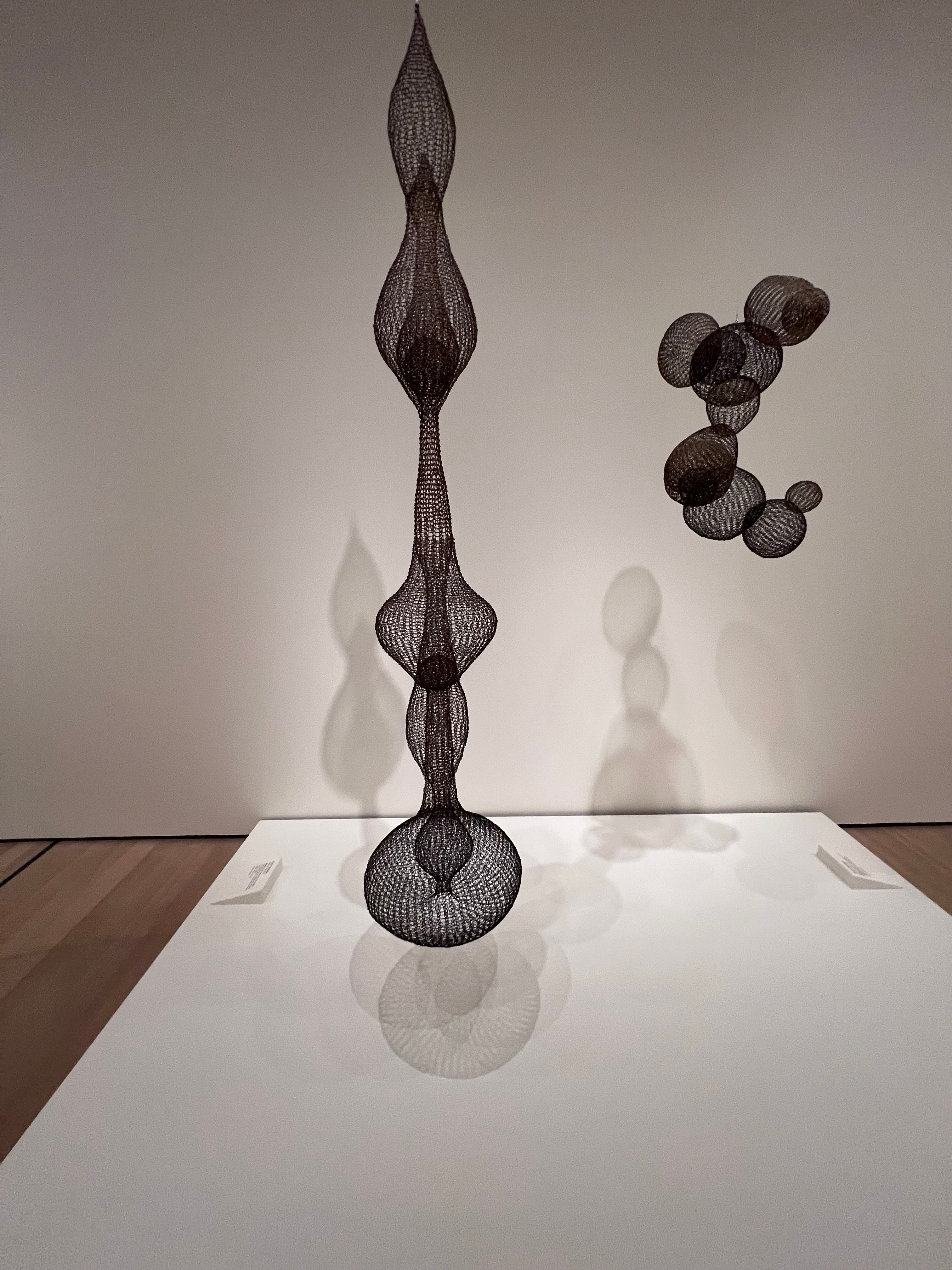
My immediate thought when I saw these two Ruth Asawa pieces was, I have your postage stamps, and I’m not even kidding. What is wrong with me.
I realized a few months ago that I always said her name in my mind “Hilma As Fuck Klint.” Again, what is wrong with me.
There was a stunning and huge piece with sound, called “Cadence,” by Otobong Nkanga:
As I wandered through the museum I kept hearing this and thought there were fire engines or ambulances down on the street. It’s wholly immersive to sit in that space and vibrate to the sounds.
Afterwards, when I turned onto my block, my building took my breath away as it often does around sunset, when the sun is setting over the Hudson River, just beyond the end of my block.
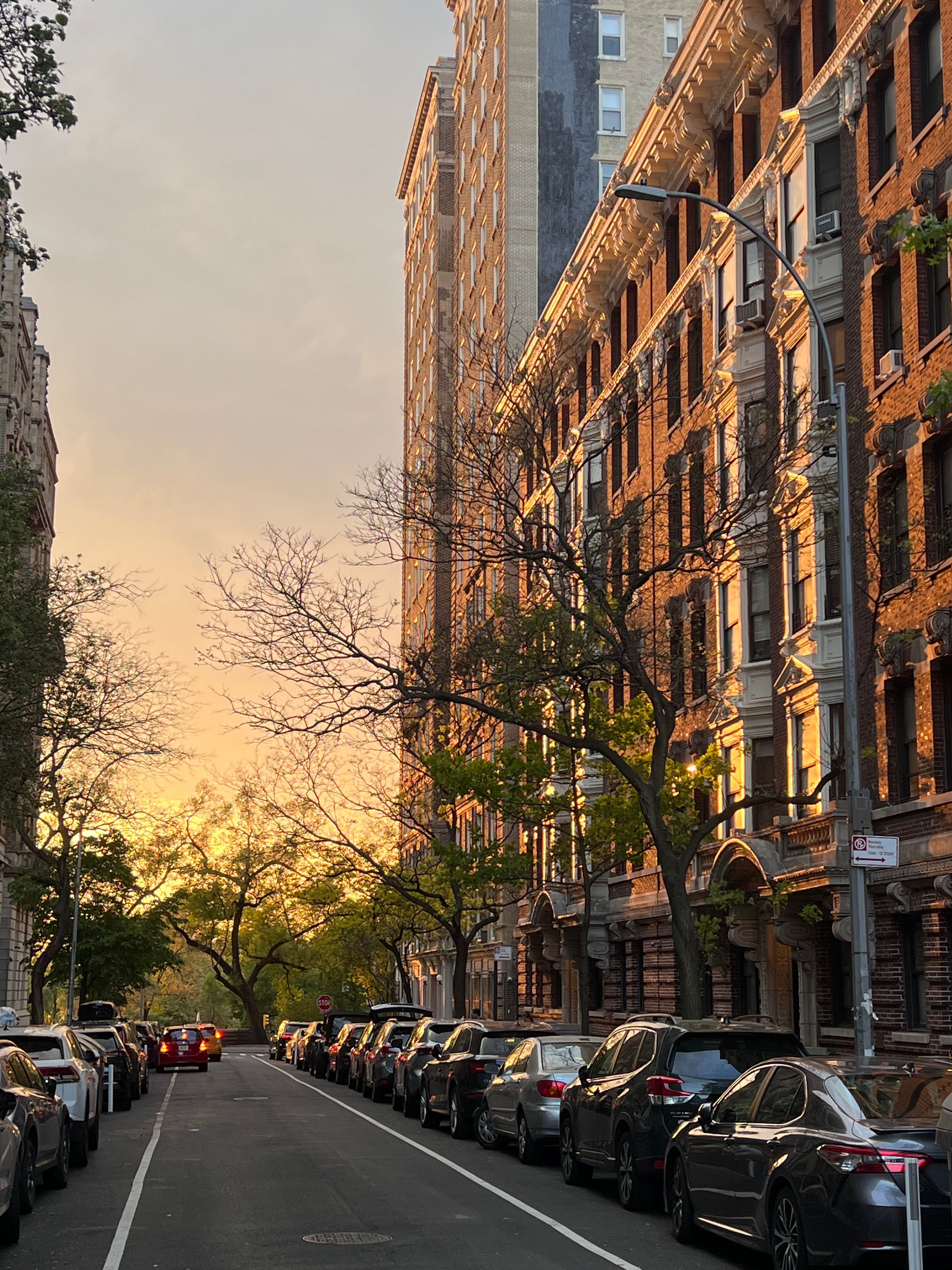
Mine is the shorter apartment building with white facades. I thought about Maggie Smith and good bones and my heart cracked. This place could be beautiful.
With such pain in my heart but eyes forward,
Lori
p.s.! Han Kang! I finished We Do Not Part, and boy do I recommend it. It’s poetic and very painful, and removed through so many layers. A woman (“K,” I’ll call her) goes to her friend “I’s” home on Jeju island in Korea to rescue her bird. “I” has been in a terrible accident and can’t go, so K travels through an incredible snow storm to I’s home, trudging by foot through a forest and falling down a small cliff to a dry river bed. She eventually gets back up to the road and makes it to the home to find the bird is dead, so she buries it. She goes out to the woodworking shed and there is I, which is impossible. Is I really there, or is this her spirit? Is K alive, herself, for that matter? Then I tells K the stories that her mother told her of the slaughters on Jeju—tens of thousands summarily shot, men women children babies, including her mother’s whole family. Some of what her mother tells was told TO her. So layer upon layer, and then also filtered through a layer of translation from Korean to English. It’s dreamy and uncertain but supported by archival materials I collected after her mother died, so it’s all also true. And the slaughters ordered by—you guessed it, the US government. Sigh. We can’t get away from ourselves here. It was also chilling to read it as the US government is kidnapping and disappearing people. Horror transformed into art while still making the horror real, what a gift she is.